
Hong Kong Aesthetics • Causeway Bay Skincare • Anti-aging HK
Cortisol Face in March: How Financial Year-End Stress Breaks Down Collagen and How Causeway Bay Skincare Supports Anti-aging HK
When March financial year-end turns your life into spreadsheets, emails, and back-to-back reviews, your skin quietly pays a biochemical price.
From “deadline mode” to “cortisol face”
Psychological stress activates the HPA axis and increases cortisol levels systemically and in the skin, which can impair barrier function and homeostasis. Chronic stress is associated with collagen breakdown, weakened elasticity, dryness, and accelerated visible aging.
For accountants, auditors, finance and legal professionals in Causeway Bay, March often means late nights, tight shoulders, and reactive skin that looks more tired than your calendar justifies. What you are seeing in the mirror is not “just lack of sleep” – it is a hormonal stress story written into your collagen and barrier.
What cortisol is doing beneath the surface
1) Collagen breakdown and sagging
Chronic stress and elevated cortisol can accelerate collagen degradation and impact elastin, weakening the dermal matrix that keeps skin firm. Over time this contributes to wrinkles, loss of elasticity, and earlier sagging around the jawline and eyes.
2) Thinner, more fragile skin
Reviews describe how stress-related glucocorticoids can reduce key structural proteins and lipids in the epidermis, affecting barrier integrity. Experimental work also links glucocorticoids to reduced collagen production and impaired healing, which can translate into skin that feels thinner and more delicate over time.
3) Barrier disruption and inflammation
Psychological stress can deteriorate barrier function, increase transepidermal water loss, and dysregulate local immune responses, making skin more reactive. Elevated cortisol has been linked with flare-ups of inflammatory conditions such as acne, eczema and psoriasis.
4) The brain–skin axis: emotions on your face
Psychoneuroimmunology research highlights that stress can affect skin through neuroendocrine pathways, influencing inflammation and barrier function. Interventions that reduce psychological stress (including relaxation-focused approaches) have shown potential to improve dermatologic symptoms in a holistic framework.
Lunch break reality check: where are you on the cortisol spectrum?
Before you decide between “push through” or “pause and reset,” take 60 seconds to map how stress is showing up on your skin and nervous system.
Cortisol Face Check-in (for CWB office days)
Takes under 1 minuteTick what is true for you in the last 7–10 days.
Why a 60-minute lunch “stillness facial” is more than pampering
Studies on massage and short spa interventions report benefits such as reduced perceived stress and lower cortisol, alongside improved mood and mental clarity. Even brief structured relaxation sessions have been linked to decreased stress-hormone levels and improved focus when employees return to work.
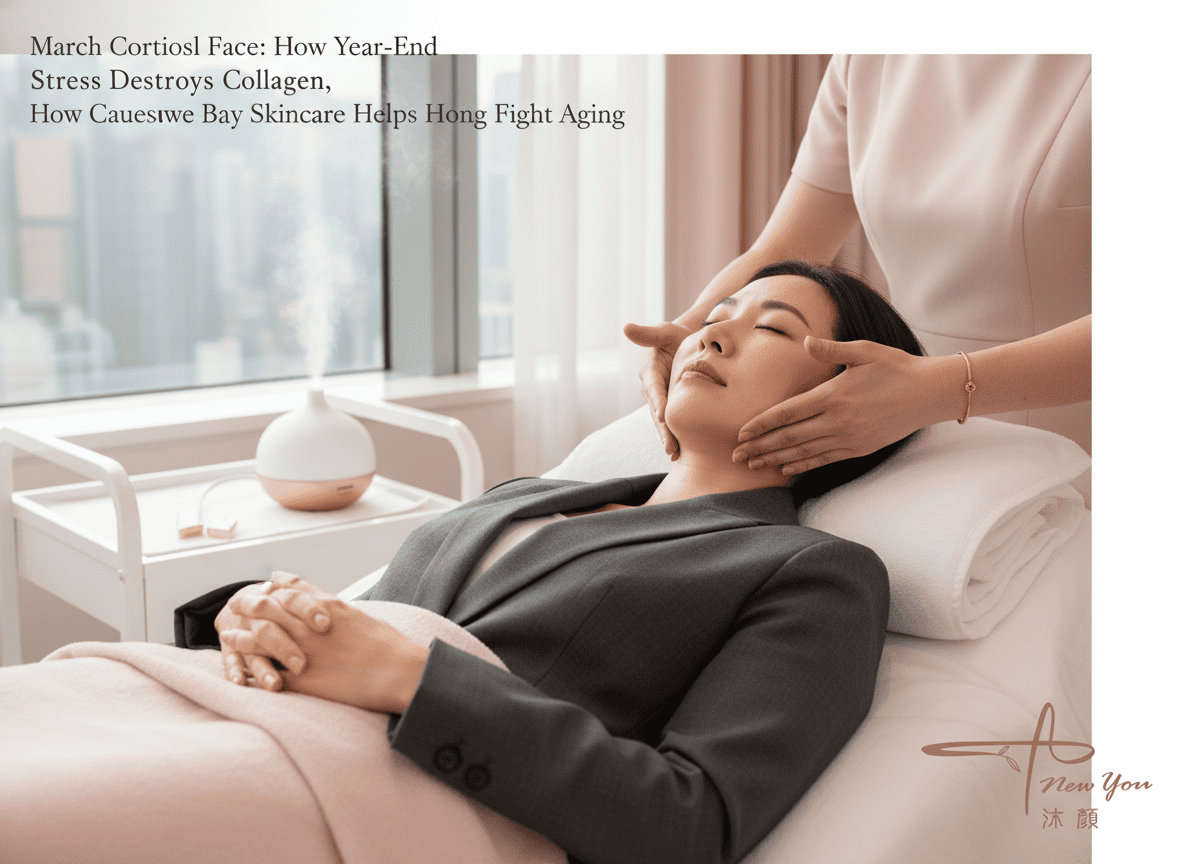
At Anewyou, we translate this into a medical aesthetics context: a 60-minute lunch break protocol that combines calming aromatherapy, gentle touch and skin-focused technology designed for sensitive, stressed complexions. The intention is not only “look fresher” but to create a nervous-system exhale your spreadsheets cannot give you.
Wellness-grade medical aesthetics vs “quick fix” across the border
Many high-pressure professionals are tempted by fast, aggressive procedures framed as simple beauty tasks. But when your stress hormones are already elevated, your skin barrier and healing capacity may be more vulnerable than usual, which is why a gentler, regulated, wellness-integrated approach can be more appropriate.
The value of staying in Causeway Bay is not only convenience – it is continuity. When your clinic is a short walk from your office, you can schedule review visits, adjust your plan as stress peaks or subsides, and treat skin as part of your long-term resilience strategy rather than a one-time “correction.”
Why your skin and mind both need a plan (not just a product)
Research in psychodermatology suggests that approaches which address both psychological stress and skin physiology may offer advantages over skin-only strategies. For professionals, that means combining evidence-informed skincare and devices with genuine relaxation rituals that help downshift your nervous system.
In practice, that might look like: a stress-aware facial protocol, mindful breathing while devices work, aromatherapy selected to support calm, and a space where you are not expected to answer emails mid-treatment. Your “cortisol face” is asking for both collagen support and emotional decompression.
Ready to turn your lunch hour into a reset ritual?
If you work in or around Causeway Bay, you do not need to wait for quarter-end to ease off before taking care of your skin. A structured 60-minute mid-day pause can become part of how you survive – and even glow through – March financial year-end.