
Hong Kong Aesthetics • Causeway Bay Skincare • Anti-aging HK
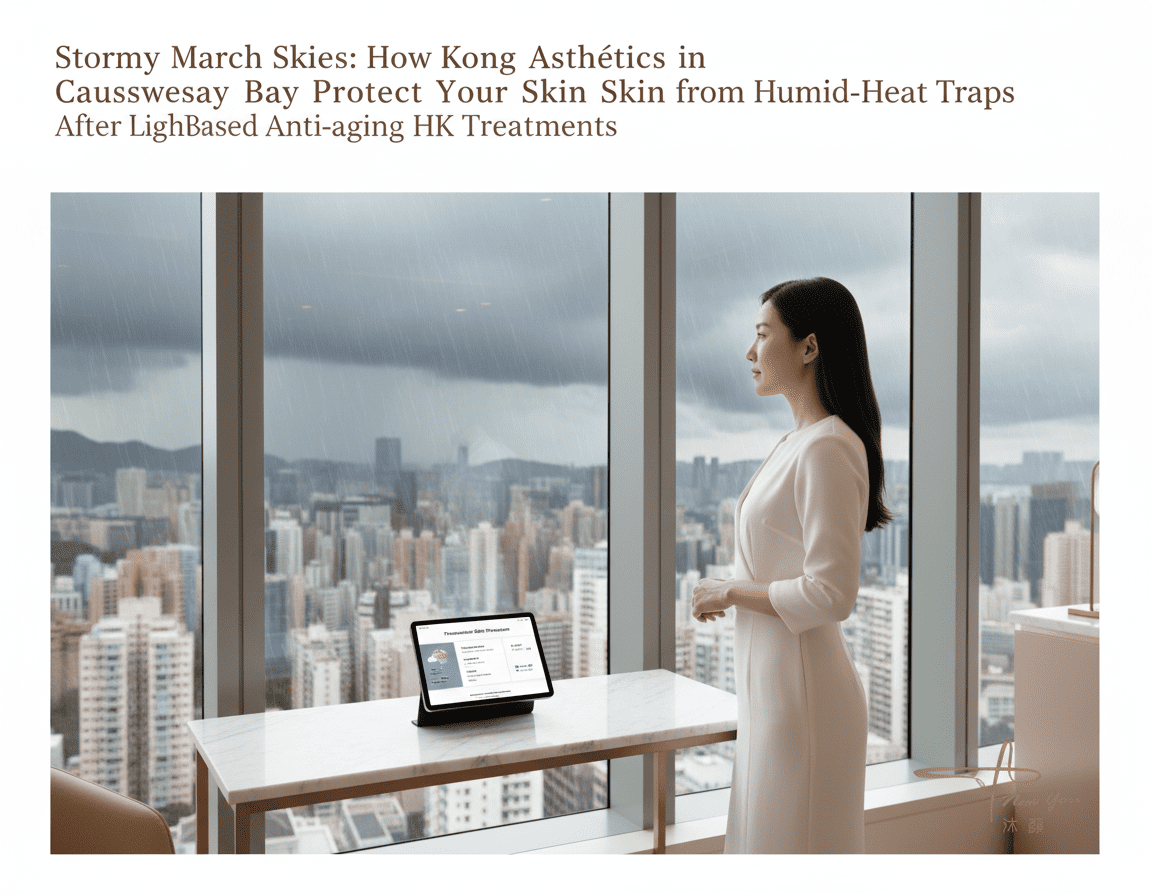
Stormy March Skies: How Hong Kong Aesthetics in Causeway Bay Protect Your Skin from Humid-Heat Traps After Light-Based Anti-aging HK Treatments
When the Hong Kong Observatory issues thunderstorm and heavy rain warnings and humidity pushes above the mid‑70s, your post‑laser skin is not living in “normal” weather anymore.
March’s first wet‑warm spell: why your skin feels “stuffy”
Early spring 2026 has already brought Hong Kong its first significant wet spell, with very humid days, low clouds and thunderstorm warnings as humid air and rainbands move across the city. Climate data show that in March, relative humidity in Hong Kong often ranges from roughly the low‑70% area up to around 88% on the most humid days, depending on the year and conditions.
Research on climate and the cutaneous microbiome notes that higher temperature and humidity can increase sebum secretion and promote survival and growth of skin bacteria, including Cutibacterium acnes, compared with dry conditions. Another review highlights that increased humidity and perspiration cause swelling of epidermal keratinocytes and pilosebaceous units, which can obstruct follicles and create a more favourable anaerobic environment for C. acnes.
How humid‑heat and pressure swings stress a healing barrier
1) Sebum, sweat and microbiome shifts
A long‑term study of seasonal microbiome changes found that humidity and hydration can drive shifts in bacterial composition, with higher humidity associated with increased bacterial diversity on facial skin. Reviews on climate and skin disease describe how high humidity plus sweating can swell follicles and favour proliferation of C. acnes, with impacts on acne and inflammation risk.
2) Barrier already weakened by energy‑based procedures
After facial laser treatments, the stratum corneum is temporarily compromised and more sensitive to environmental stressors, with guidelines advising strict UV and heat avoidance to reduce irritation and hyperpigmentation risk. When you layer a weakened barrier on top of a hot, humid, bacteria‑friendly climate, the margin for error becomes smaller.
3) Heat, humidity and post‑laser discomfort
Post‑treatment aftercare advice commonly warns against excessive heat, steam, saunas and humid environments because they can exacerbate swelling, irritation and dehydration, slowing recovery. In a thunderstorm week with “wet heat” and low air movement, simply commuting or exercising outdoors can imitate some of these triggers.
4) Pigment risk under unstable conditions
Hyperpigmentation is a recognised complication of laser therapy, and occupational UV exposure has been identified as one risk factor when post‑laser skin is not adequately protected. In Hong Kong’s unstable spring, bright intervals between rain, reflections off wet surfaces and inconsistent sun protection can quietly raise pigment risk if not managed carefully.
Local vs. overseas: who is watching the weather with you?
| Factor | Overseas “fly in, do laser, fly home” model | Causeway Bay, weather‑aware Hong Kong Aesthetics |
|---|---|---|
| Energy setting choices | Often based on clinic protocol; may not consider this week’s Hong Kong forecast when you return. | Can fine‑tune energy and density based on current humidity, temperature and your recent flare history. |
| Immediate post‑treatment environment | Hotel, airport transfers, outdoor walks in unfamiliar humidity. | Controlled clinic environment, then a short commute home with clear instructions tailored to local conditions. |
| Follow‑up during a wet spell | Remote messages, or another trip if issues arise after weather changes back in Hong Kong. | Quick in‑person reviews during heavy‑rain weeks if redness, breakouts or pigment patches appear. |
| Risk management language | Focus on device features and before/after photos. | Focus on risk exposure: heat, humidity, UV, microbiome – and specific tactics to reduce them in Hong Kong’s March climate. |
Mini Quiz: Are you in a “humid‑heat high‑risk” week?
Wet-Season Laser Risk Check (for CWB clients)
Takes under 1 minuteTick what matches your situation this week. Your pattern hints at how cautious you and your provider should be around energy and aftercare.
How Anewyou adapts light‑based Anti-aging HK to stormy weeks
When thunderstorm warnings, heavy rain and very high humidity are in the forecast, a weather‑aware clinic can take practical steps: adjusting fluence or density, spacing sessions differently, reinforcing cooling and post‑care, and tightening follow‑up windows if you are pigment‑prone.
Combined with local knowledge of “real life” – crowded MTRs, wet‑market humidity, office air‑con swings – this creates a very different risk profile from flying somewhere dry, doing a strong treatment, then stepping back into Hong Kong’s first wet‑warm spell without a local team tracking your skin.
Your next step: match your laser plan to the weather, not just your calendar
In Hong Kong, “March” can mean cool and dry, or it can mean 95% humidity, low cloud and thunderstorms. A smart Hong Kong Aesthetics plan in Causeway Bay looks at both the forecast and your skin history before deciding whether to push, pause or adjust your light‑based Anti-aging HK strategy.