
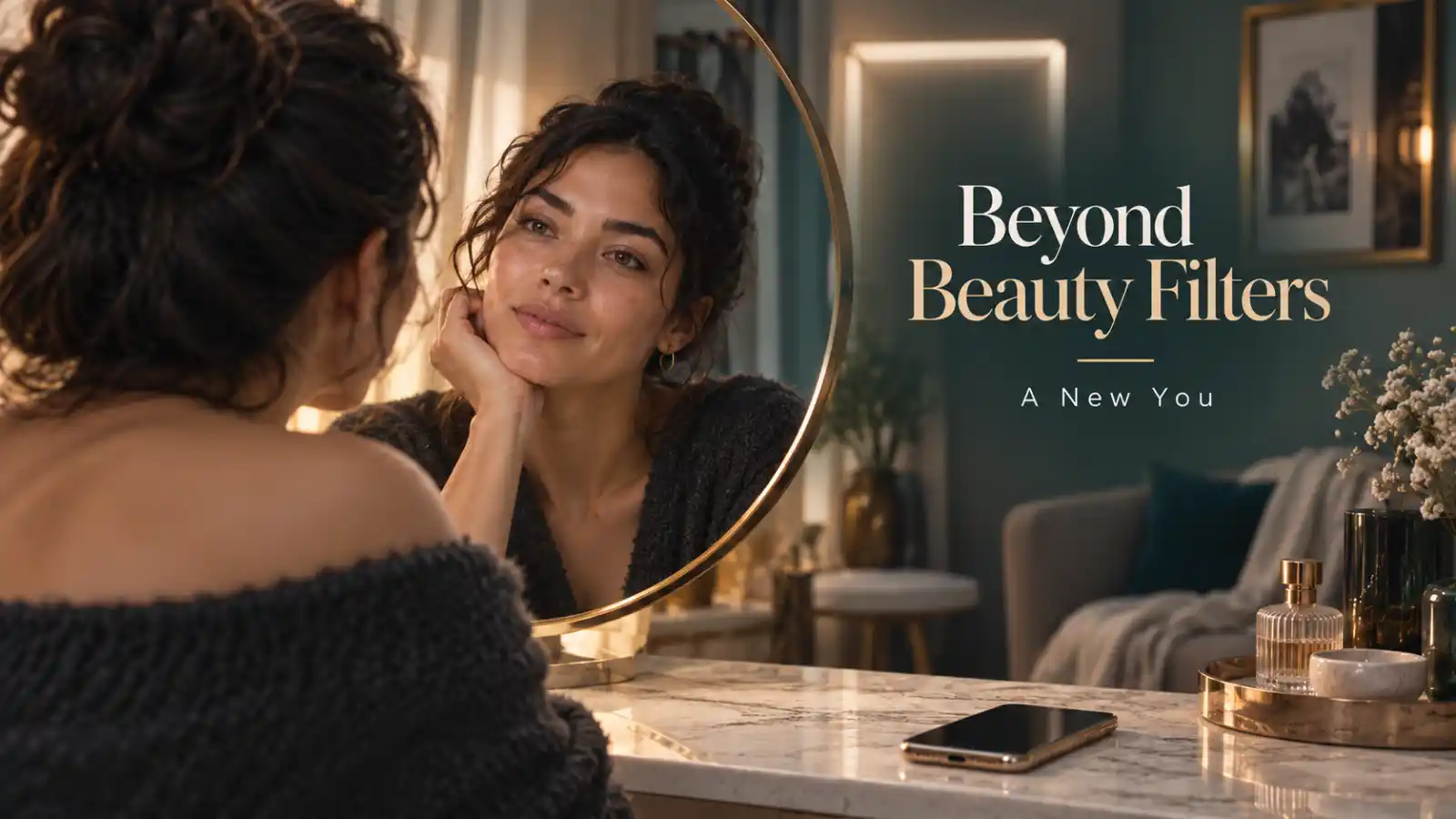
The direct answer: a filter is a conversation prompt, not a treatment blueprint
Beauty filters can change apparent skin texture, face shape, eye size, colour, lighting and symmetry at the same time. A provider cannot safely translate that bundle into one guaranteed procedure or copy another person's face. If you bring a filtered image, identify the single quality you are responding to—softer contrast, a more defined brow, less visible redness or a different lighting mood—then compare it with unfiltered photographs and your face in movement. A useful consultation turns an image into a specific, realistic question and is equally willing to explain what should not be changed.
Recent research is more nuanced than a simple filters-are-harmful claim
A 2026 randomized study in Body Image assigned 299 adult women to view idealised filtered TikTok videos, idealised unfiltered videos or travel videos. The two idealised-video groups did not differ significantly from each other on the measured outcomes. Both idealised conditions showed more negative affect than the travel control, while the unfiltered condition, but not the filtered condition, showed lower facial satisfaction than the control. The study found no significant condition differences in body satisfaction or interest in cosmetic surgery. This single experiment does not prove that filters cause procedure demand; it suggests that idealisation itself, not only a visible filter, deserves attention.
Advertising is a different question from personal use
The UK's Advertising Standards Authority has warned that beauty filters in cosmetic advertising can mislead when they exaggerate what the advertised product can achieve. That standard concerns commercial claims and evidence, not a ban on playful personal photography. When evaluating an advertisement, ask whether a filter changes the feature the product claims to improve, whether the image is representative, and whether outcomes and limitations are supported. A disclosure does not automatically cure a visual exaggeration. Before choosing care, separate paid or branded content, a creator's personal preference and independent evidence.
Reset the reference point to your own life
Take unfiltered photographs in daylight, conversation distance and several expressions. Write one priority in ordinary language and one limit you do not want crossed. Ask how change will look while smiling, speaking and ageing, not only in a still close-up. Discuss downtime, maintenance, alternatives and the possibility that no procedure is the best choice. If social content repeatedly worsens mood or fuels compulsive checking, step back and consider support from a qualified mental-health professional. A New You can help structure an appearance-goal conversation, but it does not guarantee a result, reproduce a filter or diagnose body-image concerns.
Common questions
Should I never bring a filtered reference to a consultation?
You may bring it, but label it honestly and explain the one feature or feeling you like. Also bring unfiltered images and expect discussion of anatomy, movement and limits.
Did the 2026 study prove that filters increase cosmetic-surgery interest?
No. It found no significant differences between conditions in interest in cosmetic surgery. Its more nuanced findings concern idealised content, mood and facial satisfaction in that sample.
Can a disclaimer make a filtered cosmetic advertisement acceptable?
Not automatically. If the visual effect exaggerates the product's performance, a disclosure may not remove the misleading impression. Evidence and the actual image effect both matter.
Sources
- Body Image: Effects of filtered versus unfiltered TikTok videos ↗
- UK Advertising Standards Authority: Misuse of social media beauty filters in cosmetic advertising ↗
This guide was written and edited by the A New You editorial team and has not been medically reviewed. It is not personal diagnosis or medical advice. Suitability for any treatment requires an individual assessment; seek qualified medical care for persistent or concerning symptoms.